
Key Stage 3: Drama
Curriculum Intent
Students study three units of work in Year7, three in Year 8 and two in Year 9. The aims of KS3 Drama are to introduce students to a range of dramatic techniques and develop an understanding of the dramatic process. As well as the development of subject specific skills, the curriculum also aims to support students in the development of cross curricular skills, such as collaboration and communication. Drama is part of the English National Curriculum which states in the Spoken Language section in the Programme of Study: All pupils should be enabled to participate in and gain knowledge, skills and understanding associated with the artistic practice of drama. Pupils should be able to adopt, create and sustain a range of roles, responding appropriately to others in role. They should have opportunities to improvise, devise and script drama for one another and a range of audiences, as well as to rehearse, refine, share and respond thoughtfully to drama and theatre performances.
During KS3 drama students are introduced to and use drama techniques to explore character and situations. They devise and present scripted and improvised dramas in response to a range of stimuli, demonstrating their ability to investigate ideas, situations and events and an understanding of how theatre can communicate in innovative, challenging ways. Students experiment with techniques such as still images, cross cutting, split screen, and flashback to enhance dramatic action and use theatre terminology creatively.
The overall aim of KS3 drama is to develop cross curricular skills in fitting with the English National Curriculum. The secondary aim is to begin to build a foundation of knowledge and experience for advancement to KS4 Drama, although this is mostly the focus of the Year 9 curriculum.
Curriculum overview
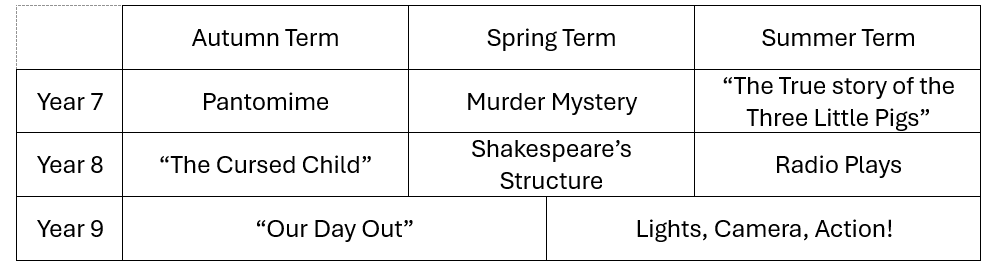
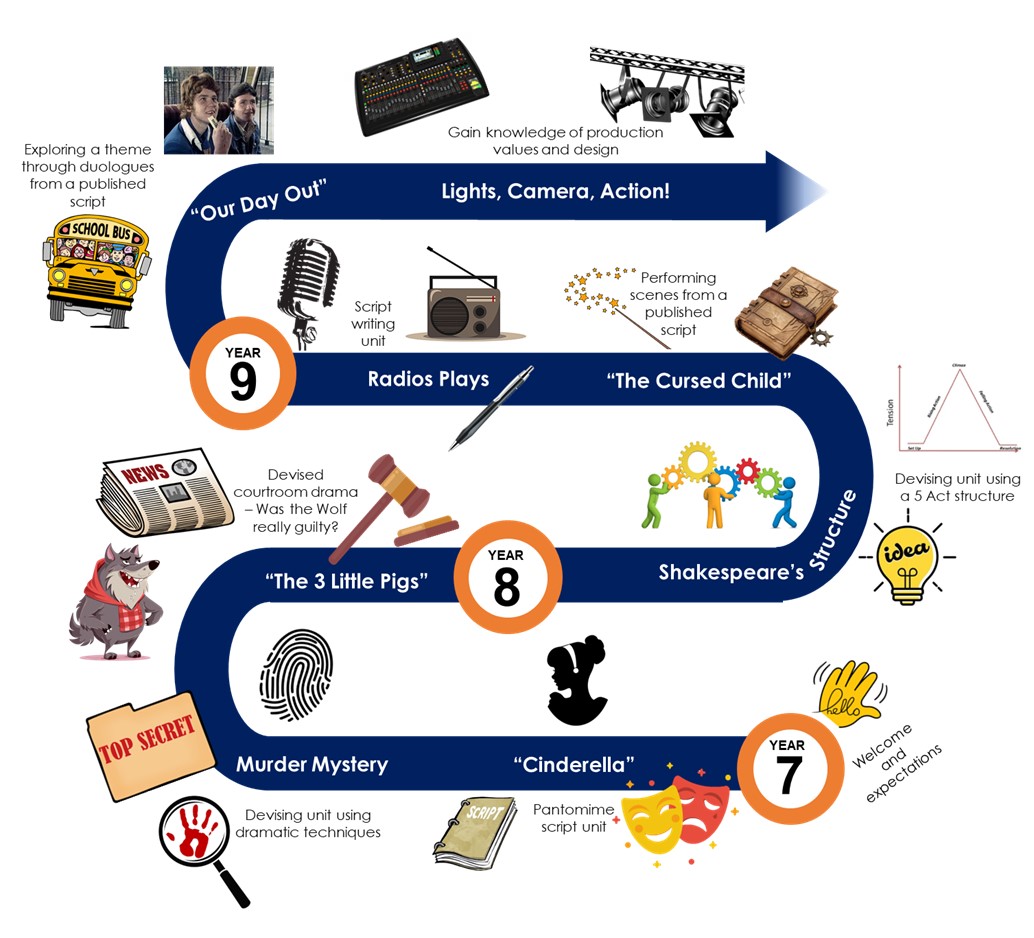
We start year 7 by exploring the genre of pantomime as students rehearse and perform scenes from a script. Students learn about the theatrical conventions of pantomime, including stock characters and audience interaction. Our Murder Mystery scheme focuses on students devising a piece of drama using techniques, such as cross cutting, to discover who is guilty of the crime. Finally, we develop our narrative skills through the technique of monologue as we put Mr Wolf on trial for the murder of the Little Pigs.
Durning the autumn term in year 8, students explore the published play “Harry Potter and the Cursed Child”. Through scripted extracts students explore character objectives and how to take a script from page to stage. The spring term sees students develop their devising skills using the 5-act structure. Students are encouraged to create an original performance using their own knowledge and experiences. Finally, in the summer term student turn their focus to script writing through the Radio Plays unit. This unit brings together all that they have learned about character and storytelling and develops their use of language and presentation skills.
As students progress into year 9, they further develop their skills through exploration of the published play “Our Day Out”. Through this unit students not only explore character objectives but learn to understand the necessity for actors to fully understand the context of a play. Students expand their analytical skills through a written evaluation of how they have communicated a central theme through their characterisation and practical work. For the second half of the year, students create a short, devised piece before learning about production values, such as set and costume design. This unit deepens their understanding of theatre job roles and responsibilities which shows students the variety of careers that the theatre can offer them.
Useful links:
The students are encouraged to watch online theatre at home, plays can be accessed through youtube, for any recommendations please see your drama teacher.
- BBC Bitesize Drama – https://www.bbc.co.uk/bitesize/examspecs/zrnjwty
Extra-curricular activities
Murray Park School has an active Drama club and the curriculum is enhanced through opportunities to visit the theatre.